The New Geography of Global Trade: Arctic Shipping, Overland Railways and the Search for Routes Beyond the Chokepoints
The emerging alternatives to martime chokepoints include shipping routes across the Arctic Ocean, railway connections between China and Europe, and new corridors linking China, Central Asia, Iran, Afghanistan and the Middle East. These developments do not make traditional sea lanes obsolete. They introduce additional options into a trading system that has become increasingly exposed to geopolitical risk.

For decades, the geography of global trade has been shaped by a relatively small number of maritime chokepoints. The Suez Canal, the Strait of Hormuz, the Bab el-Mandeb Strait and the Strait of Malacca have connected major manufacturing centres with energy producers and consumer markets. Their importance has rested on geography, but also on the assumption that ships could pass through them reliably, at a commercially viable cost and without prolonged political disruption.
That assumption is increasingly difficult to take for granted. Conflict in the Middle East, attacks on commercial shipping, sanctions, strategic competition and the vulnerability of concentrated transport infrastructure have encouraged governments and logistics companies to reconsider how goods move between continents. At the same time, climate change is opening seasonal access to Arctic waters, while new railways and upgraded freight corridors are extending the reach of overland transport across Eurasia.
The result is a gradual reshaping of global trade geography. The emerging alternatives include shipping routes across the Arctic Ocean, railway connections between China and Europe, and new corridors linking China, Central Asia, Iran, Afghanistan and the Middle East. These developments do not make traditional sea lanes obsolete. They introduce additional options into a trading system that has become increasingly exposed to geopolitical risk.
The Arctic: A Shorter Route Between Asia and Europe
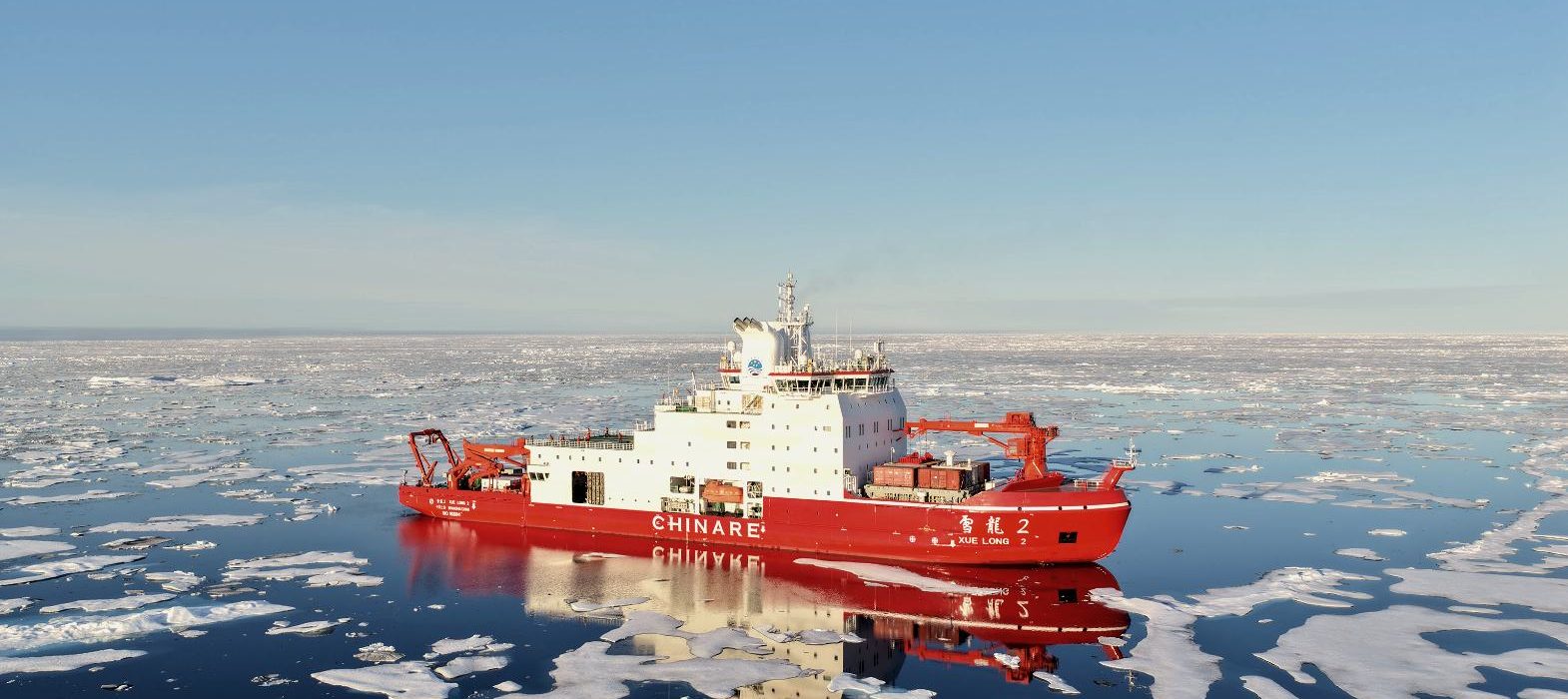
The most striking recent development is the growing commercial use of the Arctic’s Northern Sea Route, which follows Russia’s northern coastline between Asia and Europe. Historically, the route has been constrained by sea ice, extreme weather, limited infrastructure and the specialised requirements of operating vessels in polar waters. As Arctic sea ice retreats seasonally, however, the possibility of shorter voyages between major Asian and European ports has become more commercially attractive.
In August 2026, South Korea’s PanStar Group sent the container ship PanStar Acro from Busan on a trial voyage through the Arctic. The vessel called at Felixstowe in Britain, Rotterdam in the Netherlands and Gdansk in Poland before returning to South Korea. The round trip was completed in approximately 50 days, with the ship returning to Busan on 11 October. South Korean President Lee Jae Myung said the voyage “shortened the one-way sailing time by 10 days compared with the conventional route via the Suez Canal”. Lee also said the trial “allowed us to gain valuable experience operating a South Korean container ship in polar waters and to collect navigational data”.
The voyage is significant because it moved Arctic shipping beyond the realm of theoretical route planning and into a practical commercial trial by a South Korean operator. Seoul has expressed an ambition to develop Busan as an international shipping hub and establish regular Arctic services by 2030. Yet the voyage also demonstrated that shorter sailing distances do not automatically translate into a commercially superior service. Cargo volumes, insurance costs, fuel consumption, ice conditions and access to reliable navigation support will all influence whether the route can operate regularly.
South Korea is not alone. Chinese shipping company Sea Legend has introduced a regular container service connecting Ningbo, on China’s eastern coast, with Felixstowe in Britain, using the Northern Sea Route. The service, promoted as the “Ice Silk Road”, is intended to reduce the sailing time between the two ports substantially during the Arctic navigation season. The NAM noted “The Arctic is emerging as a viable alternative to the world’s traditional shipping routes as melting polar ice shortens the journey between Europe and Asia and vessels seek to avoid maritime chokepoints.”
The commercial proposition is straightforward. A shorter route can reduce transit time and potentially lower fuel consumption, while providing an alternative to routes affected by disruption in the Red Sea and around the Bab el-Mandeb Strait. For time-sensitive cargo, even a modest reduction in transit time can matter. For shipping companies, an alternative route may also provide flexibility when established lanes become difficult or expensive to use.
However, the Northern Sea Route is not an unrestricted substitute for the Suez Canal. Its commercial viability depends on seasonal ice conditions, vessel specifications, weather, insurance availability and the cost of specialised support. The route also follows Russia’s Arctic coastline, making access and operations subject to Russian jurisdiction and creating potential complications for companies exposed to Western sanctions. The very geopolitical disruptions that increase interest in Arctic shipping can therefore create additional risks for operators using it.
The Paradox of the Arctic Route
The opening of Arctic shipping routes presents an uncomfortable paradox. Climate change is creating navigational opportunities by reducing seasonal sea ice, but the environmental consequences of increased commercial activity could be substantial. More vessels introduce additional emissions, underwater noise and pollution risks into a fragile ecosystem where accidents can be particularly difficult to manage.
The infrastructure needed to support regular shipping is also limited compared with that available along established maritime corridors. Emergency response, search and rescue, port services and specialised ice navigation remain important constraints. An accident involving fuel or other pollutants could have consequences that are difficult to contain in remote polar waters.
There is also a strategic dimension. A shipping route that is geographically shorter may be politically less accessible. Because the Northern Sea Route runs along Russia’s coastline, international operators must consider the implications of sanctions, diplomatic relations and the regulatory environment. Chinese companies may be willing to develop services along this corridor, but other carriers may assess the same risks differently.
The Arctic should therefore be understood as an emerging, seasonally constrained component of the global transport system, rather than a universal replacement for established routes. Its importance may lie as much in the additional flexibility it offers as in the cargo it carries.
Overland Rail: Building a Eurasian Alternative
While the Arctic offers a new maritime passage, railways provide a different approach to the same strategic problem. Rather than finding another sea route around a vulnerable chokepoint, overland corridors can move cargo across national borders, connecting inland manufacturing centres with ports, industrial regions and consumer markets.
China has spent years developing rail freight links with Central Asia and Europe. More recently, efforts have intensified to connect Chinese industrial centres with Iran through Kazakhstan and Turkmenistan. These connections offer a land-based alternative for some cargo that would otherwise travel by sea, particularly when maritime disruption increases transit times or uncertainty. “What has changed since 2025 is not simply the number of trains passing through Central Asia, but the effort to turn these occasional services into something resembling a permanent commercial corridor.”
The distinction is important. A railway becomes a viable logistics option not simply when tracks exist, but when trains operate frequently, tariffs are predictable, border procedures are coordinated and cargo can be transferred efficiently between different railway systems. Regular departures and dependable delivery schedules are essential if manufacturers and freight forwarders are to incorporate rail into their routine supply-chain planning.
The China-Kazakhstan-Turkmenistan-Iran connection illustrates this process. Rail infrastructure linking Central Asia with northern Iran has existed for years, but the commercial effort to organise more regular services has gained momentum. Iranian railway officials reportedly stated in January 2026 that 43 China-origin freight trains had entered Iran over the preceding nine months. Earlier services had been much less frequent.
The figures indicate growing activity, although rail volumes remain modest compared with the scale of maritime trade between Asia and Europe. Rail also involves its own operational complications, including border crossings, transshipment requirements, differences in railway gauge across parts of the network and the potential impact of sanctions on payments and commercial partnerships.
Nevertheless, the development creates another option for businesses moving goods across Eurasia. It also strengthens the strategic position of countries located along the corridor, giving Kazakhstan, Turkmenistan and Iran opportunities to earn transit revenue and attract logistics investment.
Afghanistan and the Expansion of Southern Corridors
Afghanistan is also emerging as a potential link in the evolving network of Eurasian transport routes. Its location between Iran, Central Asia and South Asia gives it geographical significance, although decades of conflict, limited infrastructure and political uncertainty have constrained its role in regional commerce.
Recent initiatives have focused on extending railway connections between western and northern Afghanistan, particularly through a proposed Herat-Mazar-i-Sharif railway. The project is intended to extend the existing Khaf-Herat connection from Iran and provide a broader link between Iranian transport infrastructure and Central Asian markets.
Asia Plus reported on 7 October 2026 that the proposed railway was estimated to cost approximately US$780 million. Discussions between Iranian and Afghan officials have addressed technical specifications, financing and implementation. The planned route could become part of a wider Five Nations Railway Corridor linking Iran, Afghanistan, Tajikistan, Kyrgyzstan and China.
The significance of such a project extends beyond the movement of cargo between two countries. If completed and commercially integrated with neighbouring networks, it could give landlocked Central Asian economies additional access to Iranian ports and markets farther west. It could also provide Afghanistan with potential transit revenues and a means of connecting domestic production with regional trade.
The existing Khaf-Herat railway provides an indication of the potential demand. Asia Plus reported that freight transported along the line exceeded 640,000 tonnes between March 2025 and March 2026, compared with fewer than 15,000 tonnes in the preceding period. These figures, as reported by the publication, suggest a substantial increase in traffic, although the longer-term performance of the wider network will depend on whether the necessary infrastructure and cross-border arrangements are completed.
The obstacles are considerable. The proposed routes require investment, security, financing and cooperation among governments with differing political and economic priorities. Announced railway projects should not be confused with completed, fully operational corridors. Their commercial importance will depend on actual construction progress, service frequency and the ability to move freight across borders without excessive delays.
Even so, these projects reflect a broader effort to expand the number of available land routes between East Asia, Central Asia and the Middle East.
The Middle Corridor and the Contest for Eurasian Transit
Another important development is the expansion of the Middle Corridor, also known as the Trans-Caspian International Transport Route. It links China and Central Asia with the Caspian Sea, the South Caucasus and Türkiye, providing a route towards European markets that avoids transit through Russia.
The corridor relies on a combination of railway services, maritime crossings across the Caspian Sea and connections through Azerbaijan, Georgia and Türkiye. Because it involves several modes of transport and multiple national jurisdictions, its efficiency depends on coordination among ports, railway operators, customs authorities and governments.
The Middle Corridor has attracted greater attention as businesses and governments reassess their exposure to routes through Russia following the invasion of Ukraine and the introduction of Western sanctions. Investment in infrastructure, border procedures and freight handling is intended to make the route more predictable and commercially competitive.
At the same time, Iran is promoting southern transport connections that link China and Central Asia with Iranian territory and potentially with Türkiye and Europe. These initiatives overlap with a wider competition to establish the most commercially attractive routes across Eurasia. Regional states are using transport diplomacy to strengthen their roles in international trade.
The strategic implications are significant. Countries that provide dependable transit infrastructure can attract logistics investment, earn fees and deepen their economic relationships with major trading partners. Transport corridors can also create long-term dependencies, because the countries controlling railway access, ports and border crossings influence the conditions under which cargo moves.
Yet neither the Middle Corridor nor the southern routes through Iran are frictionless alternatives. Each involves multiple borders, infrastructure constraints and political risks. Their development is therefore less about creating a single new route to replace existing networks than about establishing a wider set of connections that can be used according to cost, timing, cargo type and geopolitical circumstances.
The Return of Geography as a Strategic Business Consideration
These developments point to a wider change in how global logistics is organised. For much of the period of expanding globalisation, supply-chain optimisation concentrated on minimising costs through specialisation, large vessels, high-capacity ports and established maritime routes. Companies generally benefited from consolidating cargo and moving it through well-developed networks.
Geopolitical disruption has introduced a more complicated calculation. The cheapest route under normal conditions may become expensive when a canal is blocked, a strait becomes dangerous or sanctions restrict access to particular ports and shipping services. Delays can disrupt production schedules, increase inventory requirements and force companies to pay more for insurance, fuel or alternative transport.
A wider range of routes can reduce dependence on a single corridor, but diversification is not cost-free. Arctic shipping may offer shorter distances while requiring more specialised vessels and insurance. Rail freight may provide an alternative to maritime transport while introducing additional border crossings and transshipment costs. Southern Eurasian corridors may reduce reliance on particular maritime passages while creating exposure to political instability elsewhere.
For companies, the appropriate response is not necessarily to abandon established routes. It is to assess whether alternative corridors are sufficiently reliable and commercially viable to form part of a broader supply-chain strategy. Different routes may be suitable for different commodities, delivery schedules and levels of urgency.
For governments, the incentives are equally clear. Investment in ports, railways, customs systems and logistics hubs can strengthen national competitiveness while providing greater strategic flexibility. The countries that develop dependable infrastructure and predictable transit arrangements may gain an advantage as businesses reconsider the geography of their supply chains.
A More Distributed Global Transport System
The emergence of Arctic shipping services, the expansion of rail freight through Central Asia and the development of routes through Iran and Afghanistan should not be interpreted as the end of traditional maritime trade. The Suez Canal, the Strait of Malacca and other established passages remain central to global commerce because they are supported by extensive infrastructure, established shipping networks and substantial economies of scale.
The more consequential change is that alternatives are becoming more tangible. The Arctic is being tested commercially. Rail connections between China and Iran are becoming more regular. Countries across Central Asia are seeking to position themselves as transit hubs, while the Middle Corridor and southern routes compete for investment and cargo.
These routes remain uneven in their maturity, capacity and reliability. Some are operational but limited by seasonality or cost. Others depend on infrastructure that has yet to be completed. Their development will be determined by commercial demand as much as by political ambition.
The underlying direction, however, is clear. Global trade is moving towards a more complex network of maritime and overland connections, in which route selection increasingly involves balancing distance, cost, reliability, environmental impact and geopolitical exposure.
In that environment, geography is once again becoming a strategic business consideration. The question is no longer simply how to move goods along the most efficient established route. It is how to preserve access to markets when that route becomes unreliable, and whether alternative corridors can provide the flexibility needed to keep trade moving.
More Insights

There is a recurring debate in freight about what should happen when market prices move sharply after a contract has been signed. When rates rise, shippers argue that…
Read Article
A convoy departs Asunción carrying 54,000 tonnes of soybeans. It moves down the Paraguay River, joins the Paraná, passes the ports of Greater Rosario and heads toward the…
Read Article
Barely 48 hours after US and Israeli strikes hit Iranian targets and Tehran launched retaliatory missiles at US bases across the Gulf, the world’s most important energy and…
Read Article