Supply chain shockwaves: Conflict puts Hormuz, Red Sea and critical feedstocks in the firing line

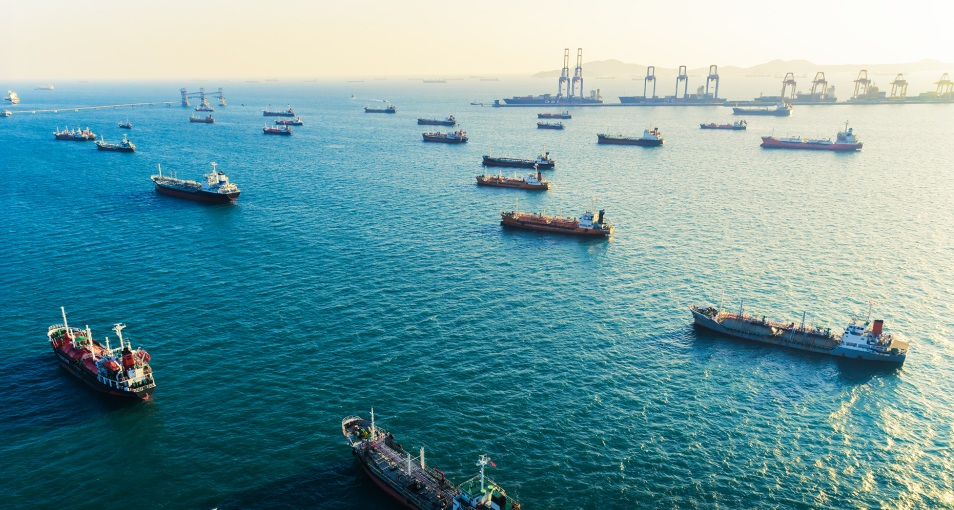
Barely 48 hours after US and Israeli strikes hit Iranian targets and Tehran launched retaliatory missiles at US bases across the Gulf, the world’s most important energy and trade arteries are on high alert. The Strait of Hormuz and the Red Sea, twin chokepoints that together carry roughly one-fifth of global oil and a huge slice of containerised and chemical trade, are no longer abstract risks. They are live flashpoints.
Markets are pricing in the nightmare scenario: a partial or full closure of Hormuz, renewed Houthi attacks in the Red Sea, and the resulting cascade through chemicals, fertilisers, metals and consumer goods. Oil has already spiked. Freight rates and war-risk insurance are twitching higher. For industries still recovering from the 2023-25 Red Sea crisis, the sense of déjà vu is acute, only this time the stakes are higher.
The Hormuz gamble: 20% of the world’s oil and LNG at risk
The Strait of Hormuz remains the undisputed king of energy chokepoints. In 2024-25 it carried an average of 20 million barrels per day of crude, condensate and refined products, roughly 20% of global petroleum liquids consumption and about 25-27% of all seaborne oil trade. Roughly 20% of global LNG also transits the narrow waterway, almost all of it Qatari. More than 80% of these volumes head to Asia, with China, India, Japan and South Korea accounting for the lion’s share. Alternative pipelines (Saudi East-West, UAE’s Habshan-Fujairah and others) can bypass only 15-20% of the volume at best, roughly 2.6-5.5 million b/d.
A full closure, while economically suicidal for Iran itself, is no longer dismissed as impossible. Bloomberg and other outlets reported tankers already avoiding the strait in the immediate aftermath of the strikes. Investment banks and analysts have dusted off their playbooks: a prolonged disruption could push Brent $30-70 higher in the base case, with extreme scenarios (full blockade plus broader conflict) taking prices to $120-130/bbl, a 70%+ jump from pre-strike levels.
Even a partial “effective closure” through mining, harassment or insurance-driven avoidance would remove millions of barrels daily and trigger immediate Asian stockdraws.
Red Sea: a fragile recovery about to unravel
The 2023-25 Houthi campaign already proved how fragile modern supply chains are. Rerouting via the Cape of Good Hope added 10-14 days and 3,000-3,500 nautical miles to Asia-Europe voyages. Container rates to Europe tripled at peak; chemical freight rates in some segments rose threefold. War-risk insurance for Red Sea transits leapt from $10,000-20,000 to $150,000-500,000 per voyage.
By early 2026, some carriers had tentatively returned and long-term contract rates had eased 25% from late-2025 peaks, yet they remained 45-58% above 2023 levels. Another wave of attacks, or simply fear of Hormuz spillover forcing more Cape routing, would wipe out that fragile recovery overnight and reignite capacity shortages across the entire container fleet.
Indian exporters are already sounding the alarm. Federation of Indian Export Organisations president SC Ralhan warned of 15-20 day delays, surging marine insurance and renewed pressure on the rupee if energy prices climb. Apparel and leather shippers recall the 2024 chaos and fear a repeat.
Chemicals: Iran’s quiet dominance in methanol and fertilisers
Iran is not a giant gas exporter but it is a chemical superpower. It ranks among the world’s top methanol producers and exporters, supplying roughly 10% of China’s methanol demand in normal times (with shares spiking higher in some recent periods) and feeding downstream production of formaldehyde, acetic acid, plastics and fuels. It is also a major exporter of ammonia, urea and polymers.
Disruption to Iranian ports or Hormuz would tighten global balances almost immediately. Europe’s chemical sector, already battered by high energy costs and multiple plant closures, has little buffer. Fertiliser markets, still sensitive after previous shocks, would feel the urea and ammonia squeeze hardest; Iran accounts for roughly 10% of global urea export trade.
Middle East Gulf producers supply 35% of seaborne methanol and 14% of global seaborne chemical trade that must pass Hormuz. Any sustained outage would force buyers to scramble for higher-cost alternatives from the US, Trinidad, Russia or China, at a time when many plants are already running flat out.
Aluminium: millions of tonnes of supply at risk
The conflict has delivered what Shanghai Metals Market (SMM) calls “the largest geopolitical black swan” for the global primary aluminium market. Iran’s own smelting capacity (660,000 tonnes installed, 620,000 tonnes produced in 2025) is modest, only 0.8% of world output, but it is highly dependent on imported alumina (80% from India and elsewhere). Strikes on power and industrial infrastructure, plus any port/logistics paralysis, could slash Iranian output by nearly 600,000 tonnes/year.
Far larger is the regional domino effect. Middle East electrolytic aluminium capacity stood at 6.92 million tonnes in 2025 (9% of global ingot supply). A Hormuz blockade would trap 464,000 tonnes of annual exports and choke alumina and bauxite imports. SMM analysis warns that regional alumina production could only support 36% of local aluminium output, risking cuts or shutdowns for 64% of Middle East capacity, a potential multi-million-tonne supply shock when combined with trapped exports and higher energy costs.
Aluminium smelting is brutally energy-intensive. A sustained oil and gas price spike would lift power costs across the Gulf smelters (UAE, Qatar, Saudi Arabia), squeezing margins and forcing load reductions. Risk-averse sentiment is already amplifying price volatility.
Broader ripples and corporate reality check
The list of exposed sectors is long: plastics and packaging (methanol derivatives), fertilisers and agriculture (urea/ammonia), automotive and construction (aluminium), consumer goods (longer shipping times), and even electronics via higher energy and resin costs.
For many multinationals the playbook is familiar from 2023-24: accelerate near-shoring or “China+1” diversification, build inventory buffers for critical feedstocks, secure alternative logistics contracts, and dust off war-risk insurance riders. But buffers are thinner after years of just-in-time optimisation and the lingering effects of previous disruptions.
Chemicals traders and producers with resilient Gulf networks or floating storage options may gain relative advantage in the short term. Long-term, the crisis accelerates the push towards non-Middle East chemical and fertiliser capacity, in North America, India, and Southeast Asia.
Outlook: vigilance, not panic — for now
Markets have not yet priced in a full Hormuz closure. Tankers are rerouting cautiously rather than stopping. Houthi activity has not (yet) reignited at 2024 levels. But the margin for error has vanished.
As one Gulf-based chemical executive put it privately: “We survived the Red Sea. Hormuz is different. This is existential for half the planet’s energy and feedstock flows.”
Companies that treat this weekend’s events as a temporary spike will regret it. Those already stress-testing scenarios for 30-60-90 day closures of key straits, and lining up alternative suppliers, routes and hedging, will be the ones still standing when the dust settles.
The Middle East has reminded the world, once again, that modern supply chains remain hostage to geography and geopolitics. The next few weeks will determine whether this is a short, sharp shock or the start of a prolonged and expensive reconfiguration of global trade.
While no sweeping new “lockout” of all suspected Iran-related accounts has been announced in the immediate aftermath of the strikes, the Trump administration’s ongoing “maximum pressure” campaign has long targeted Iranian financial networks, shadow banking operations, and any entities suspected of links to the regime. This has created widespread banking issues for individuals, businesses, and institutions with even tangential Iranian connections.
Core US Sanctions Framework on Iranian Banking
US sanctions on Iran, administered primarily by the Treasury Department’s Office of Foreign Assets Control (OFAC), have barred Iranian financial institutions from direct access to the US financial system for years. Key elements include:
- Blocking of assets: Any property or interests in property of designated persons or entities in the US (or under US persons’ control) are frozen and must be reported to OFAC.
- Prohibitions on transactions: US persons and entities are generally barred from dealings with blocked parties, with secondary sanctions risking foreign banks that facilitate such activity.
- SDN List designations: Major Iranian banks (e.g., Bank Melli Iran, Bank Saderat Iran, Bank Sepah) have been on the Specially Designated Nationals (SDN) List for over a decade, cutting them off from dollar-based clearing and correspondent banking relationships.
Recent actions in late 2025 and early 2026 have escalated this:
- January 2026 sanctions targeted Iranian officials, security figures, and “shadow banking” networks laundering oil revenues through front companies in the UAE, Singapore, Britain, and elsewhere.
- February 2026 designations focused on Iran’s “shadow fleet” of vessels evading oil export restrictions, plus procurement networks for ballistic missiles and drones.
- OFAC has sanctioned entities and individuals enabling illicit petroleum sales, with implications for any accounts or transactions linked to these.
These measures build on longstanding restrictions: Iranian banks remain cut off from SWIFT in many cases, and non-Iranian banks risk severe penalties (including being cut off from US markets) for processing Iran-related payments.
Immediate Banking Impacts from the Conflict
In the wake of the strikes:
- US financial institutions freezing accounts: US banks have historically frozen or blocked accounts accessed from Iran or linked to sanctioned entities due to compliance fears. The State Department notes that US institutions may block accounts accessed via the internet from Iran, a practice likely to intensify amid heightened tensions.
- Foreign banks’ caution: International lenders, especially in Europe, Asia, and the Gulf, have de-risked from Iran-linked clients for years. The conflict has prompted renewed scrutiny: correspondent banks may freeze or reject transactions involving Iranian nationals, dual citizens, or entities with Gulf-based intermediaries suspected of sanctions evasion.
- Crypto and shadow channels hit: US actions have targeted digital asset exchanges (e.g., UK-registered platforms linked to IRGC transactions) and shadow networks, pushing regime funds into murkier channels—but these too face increasing enforcement.
For individuals in places with a large Iranian diaspora and trade links, this means:
- Potential freezes on US-dollar accounts if flagged as Iran-related (e.g., via family ties, past remittances, or business dealings).
- Delays or rejections in cross-border payments, especially involving the Middle East or commodities.
- Heightened KYC (know-your-customer) demands from local banks to avoid secondary sanctions risks.
Broader Industry and Economic Fallout
The banking squeeze compounds the military escalation’s effects:
- Oil and trade disruptions: With Hormuz under threat, Iran’s already curtailed oil exports face further pressure from shadow fleet sanctions, starving the regime of revenue and amplifying domestic economic strain.
- Global compliance burden: Multinational banks and corporates are ramping up sanctions screening, leading to false positives and frozen accounts for innocent parties with Iranian-sounding names or connections.
- Regional ripple effects: Gulf banks (e.g., in UAE, where shadow networks operate) face US pressure to sever ties, while FATF’s ongoing “high-risk” listing of Iran urges countermeasures like enhanced due diligence.
Treasury Secretary Scott Bessent has emphasized protecting the US financial system’s integrity, signaling aggressive enforcement. As the conflict evolves, potentially with more designations if Iran escalates, banking issues could worsen rapidly.
Companies and individuals with any Iran exposure should urgently review accounts, consult compliance experts, and prepare alternative payment routes. For now, the system isn’t fully “locked out,” but the combination of existing sanctions, rapid OFAC actions, and war-risk aversion has made Iran-linked banking extraordinarily difficult and increasingly perilous.
More Insights
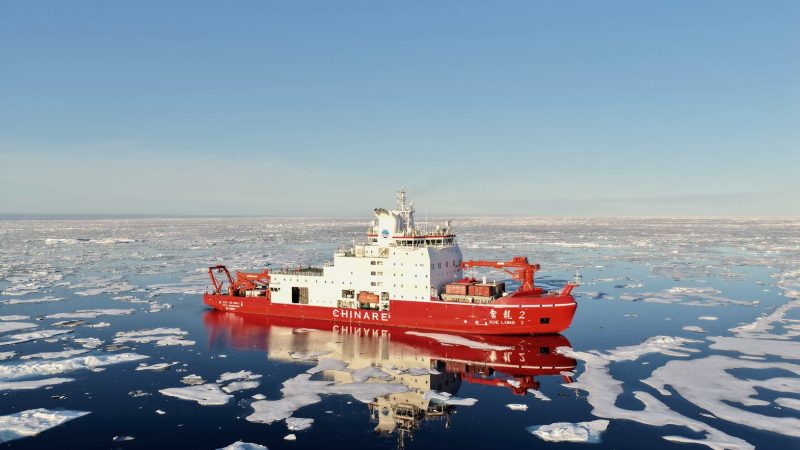
The emerging alternatives to martime chokepoints include shipping routes across the Arctic Ocean, railway connections between China and Europe, and new corridors linking China, Central Asia, Iran, Afghanistan…
Read Article
There is a recurring debate in freight about what should happen when market prices move sharply after a contract has been signed. When rates rise, shippers argue that…
Read Article
A convoy departs Asunción carrying 54,000 tonnes of soybeans. It moves down the Paraguay River, joins the Paraná, passes the ports of Greater Rosario and heads toward the…
Read Article